
One Family
How to build suspense within a family of killers

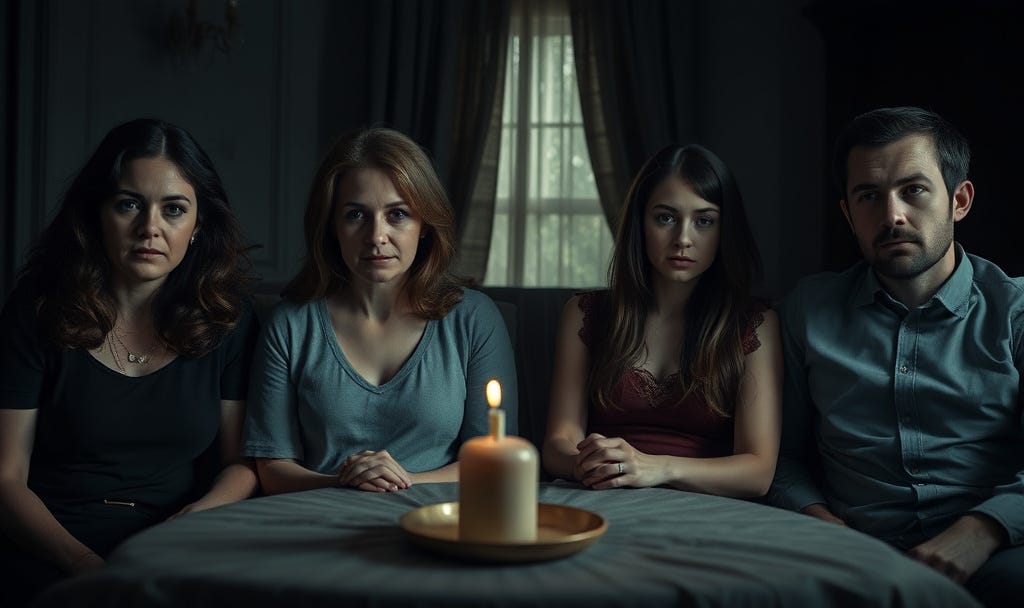
How I Built a Psychological Thriller Series Around One Family
When I started writing what would become the One Family Thriller series, I didn’t begin with a murder.
I began with a question:
What if the most dangerous person in a town isn’t the obvious suspect — but the one everyone trusts?
That question shaped everything that followed.
1. I Didn’t Start With the Crime — I Started With Control
Most thrillers begin with a body.
I began with a personality.
At the center of this series is a family dynamic built on control — emotional control, narrative control, reputational control. I wanted to explore how someone could manipulate perception so thoroughly that even obvious patterns would be ignored.
Before I mapped the deaths, I mapped the power structure:
Who influences whom?
Who is afraid?
Who is loyal?
Who is quietly watching?
Once those answers were clear, the crimes became inevitable.
2. I Designed the Pattern Before the Plot
The series hinges on multiple deaths, but they aren’t random.
I created a timeline first — a hidden one.
What the town believes happened.
What the police believe happened.
What actually happened.
Only when those three timelines diverged did the story begin to feel dangerous.
Readers love patterns — especially when they realize before the characters do that something isn’t adding up.
That’s where psychological tension lives.
3. I Built the Setting as a Character
Bramblewood isn’t just a backdrop.
It’s complicit.
Small towns are powerful in fiction because reputation matters more than truth. Everyone knows everyone. Which means accusations travel fast — and doubts travel quietly.
I wanted a setting where:
A grieving family is automatically believed.
A troubled teen is automatically suspected.
A detective questioning the narrative feels like an outsider.
The town doesn’t just host the story. It pressures it.
4. I Focused on Perception, Not Just Evidence
In real life, evidence can be planted.
But perception? That’s even more powerful.
If a community already believes someone is capable of violence, it doesn’t take much to confirm that bias.
So instead of writing a story about forensic proof, I wrote about:
Social proof
Emotional manipulation
Carefully rehearsed grief
The comfort of having someone to blame
Once the town decides who the villain is, the truth doesn’t stand a chance.
That idea became the backbone of the series.
5. I Structured the Series Like Peeling an Onion
Each book exposes one layer.
Not everything at once.
In Book One, the surface cracks.
In Book Two, the pattern deepens.
In later books, the illusion begins to collapse.
I didn’t want a twist just for shock value. I wanted a slow tightening — where readers feel uneasy long before they know why.
The goal isn’t just surprise.
It’s dread.
6. The Core Theme: Who Do We Choose to Believe?
At its heart, this series asks one unsettling question:
If someone is respected, articulate, and grieving… do we ever question them?
And if the accused looks angry, isolated, or different… how quickly do we decide they’re capable of something terrible?
Psychological thrillers work best when they expose uncomfortable truths about human behavior.
Not monsters.
People.
Why I Keep Returning to This Family
Because the most chilling villains aren’t chaotic.
They’re controlled.
They don’t lash out.
They calculate.
And sometimes the scariest part isn’t the crime itself.
It’s how easily everyone accepts the explanation.
About the series
He died trying to tell the truth.
Now the wrong boy is blamed.
In Bramblewood, tragedy comes in threes.
Evan.
Tyler.
Chase.
And someone made sure Julian Vance took the fall.
Because sometimes the most dangerous person isn’t the one behind bars…
It’s the one everyone trusts.
The Most Dangerous Person Isn’t the One Behind Bars
When a tragedy hits a small town, people don’t just want justice.
They want relief.
They want a face to attach to the fear. A name to whisper. A villain to blame.
Because once someone is accused, the chaos feels contained. The story feels complete.
But what happens when the wrong person is chosen?
What happens when the town decides who the villain is before the truth has a chance to breathe?
That question has always fascinated me — not just as a writer, but as a reader of psychological suspense. We’re drawn to stories where the danger doesn’t come from a masked stranger in the dark, but from someone woven into the fabric of daily life. A neighbor. A parent. A trusted voice.
In real life, communities protect their own. They defend reputations. They close ranks. And sometimes, without meaning to, they help bury the truth.
That tension — between perception and reality — is where psychological thrillers thrive.
A planted narrative is far more powerful than planted evidence. If enough people believe a version of events, it becomes the truth. Even if it isn’t.
Especially if it isn’t.
In small towns, patterns are harder to see because everyone is too close to them. One suspicious death can be dismissed. Two can be a coincidence. Three? By then, no one wants to ask questions anymore.
Because asking questions risks tearing apart something fragile — a family, a reputation, a carefully curated image.
And that’s where the real danger lives.
Not in the accused.
But in the trusted.
In my One Family Thriller series, I explore what happens when a town settles for the wrong answer. When a teenager becomes the convenient villain. When earlier tragedies were explained away too quickly. And when one detective starts to suspect the case is just a little too perfect.
Each book peels back another layer of what really happened — and why.
Because sometimes justice isn’t about finding the killer.
It’s about surviving the truth.
If you love psychological thrillers where secrets simmer beneath polished surfaces and the villain hides in plain sight, you can start the series here.
